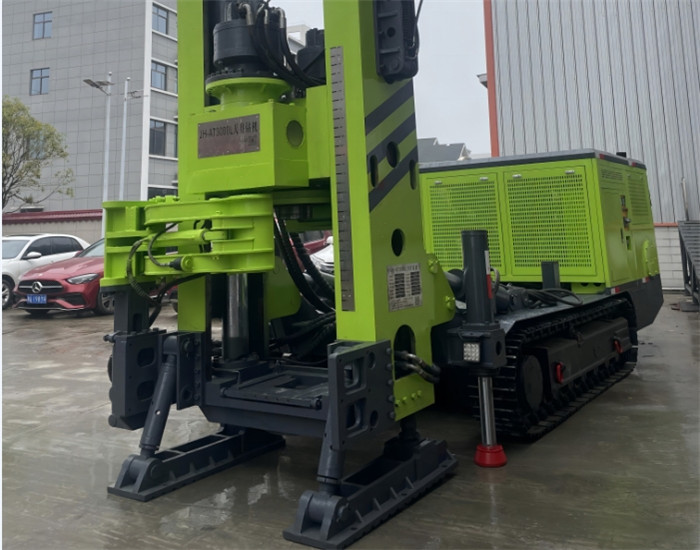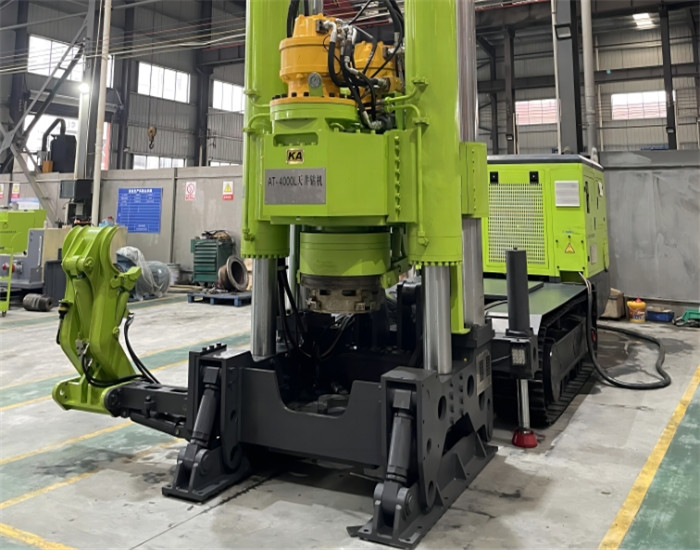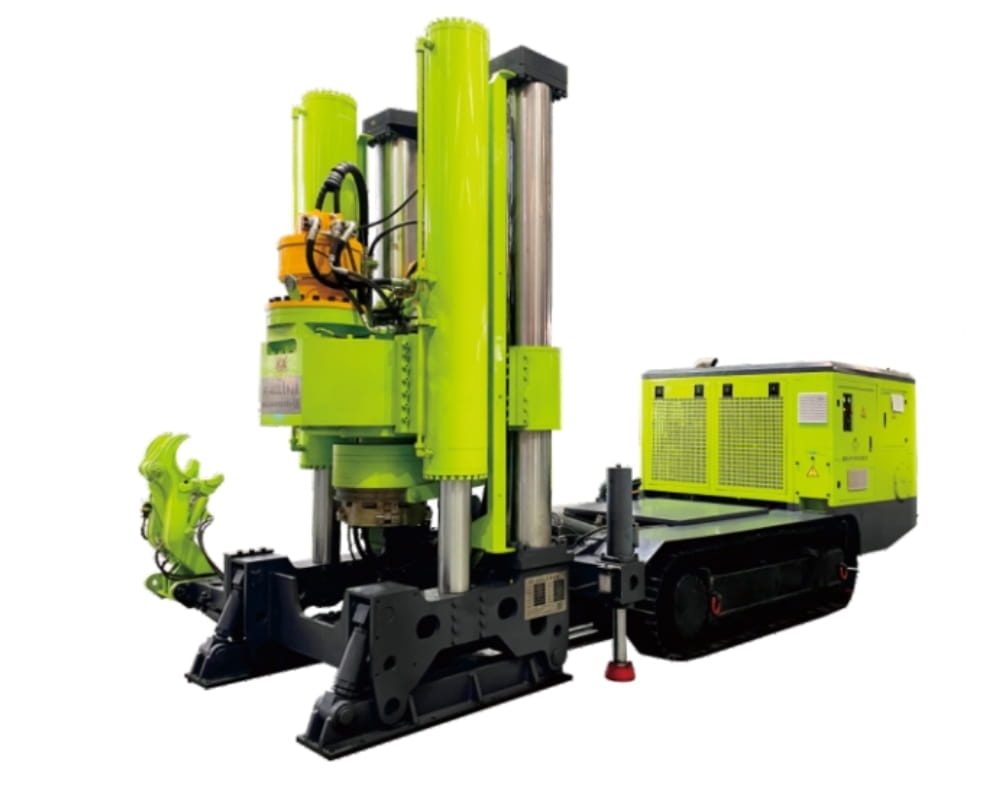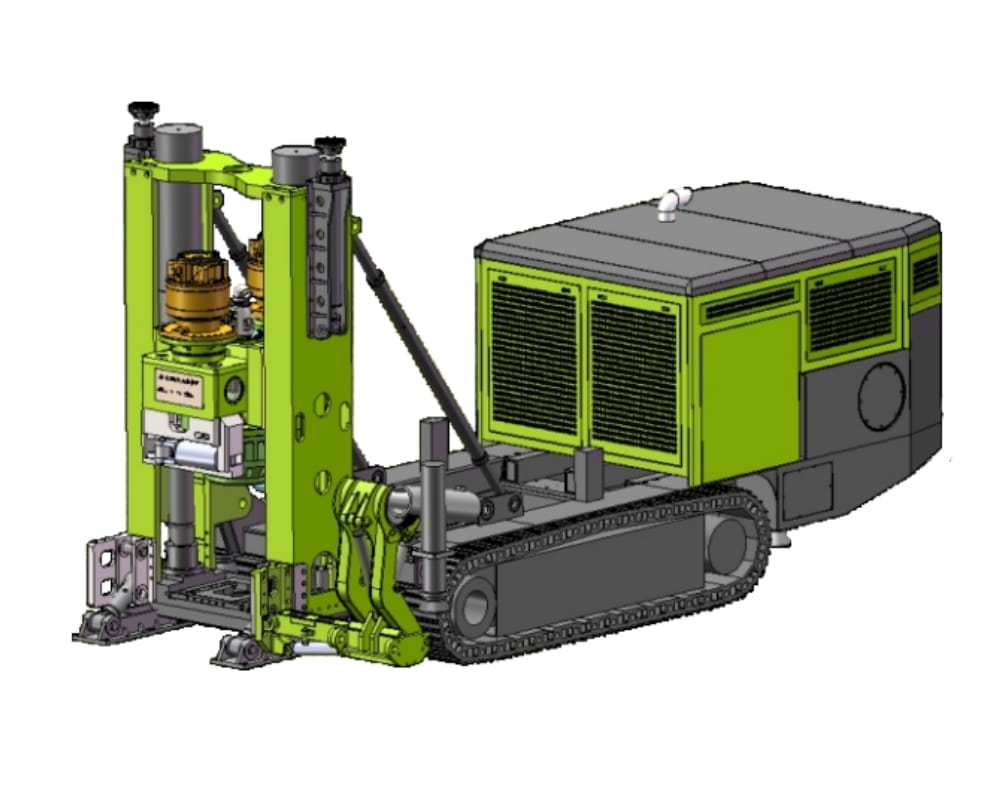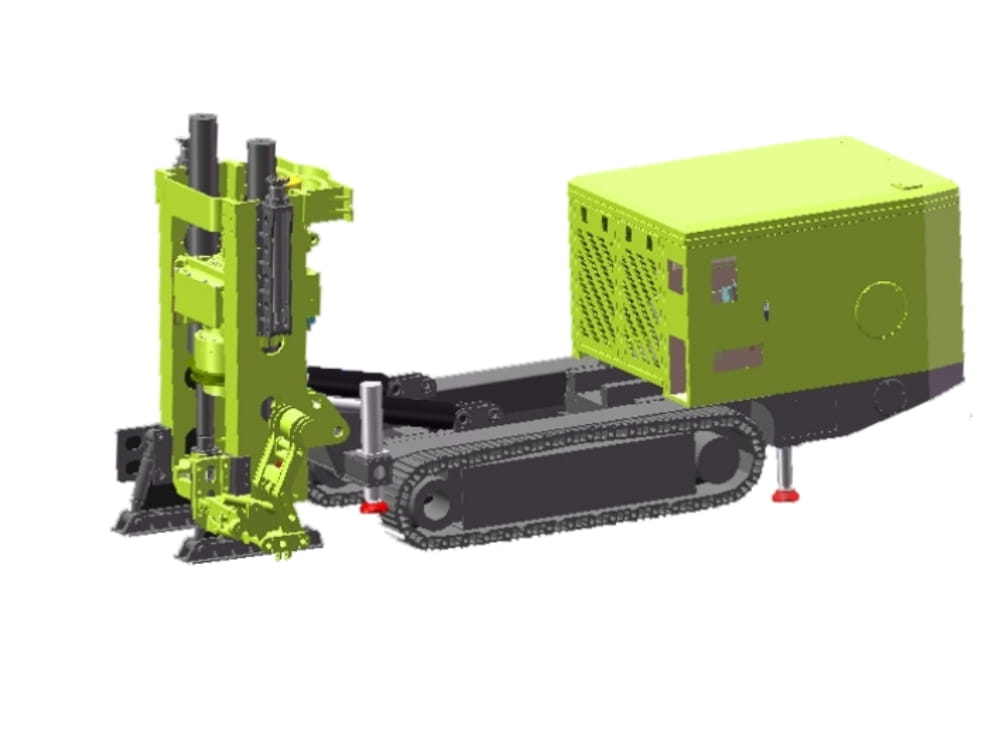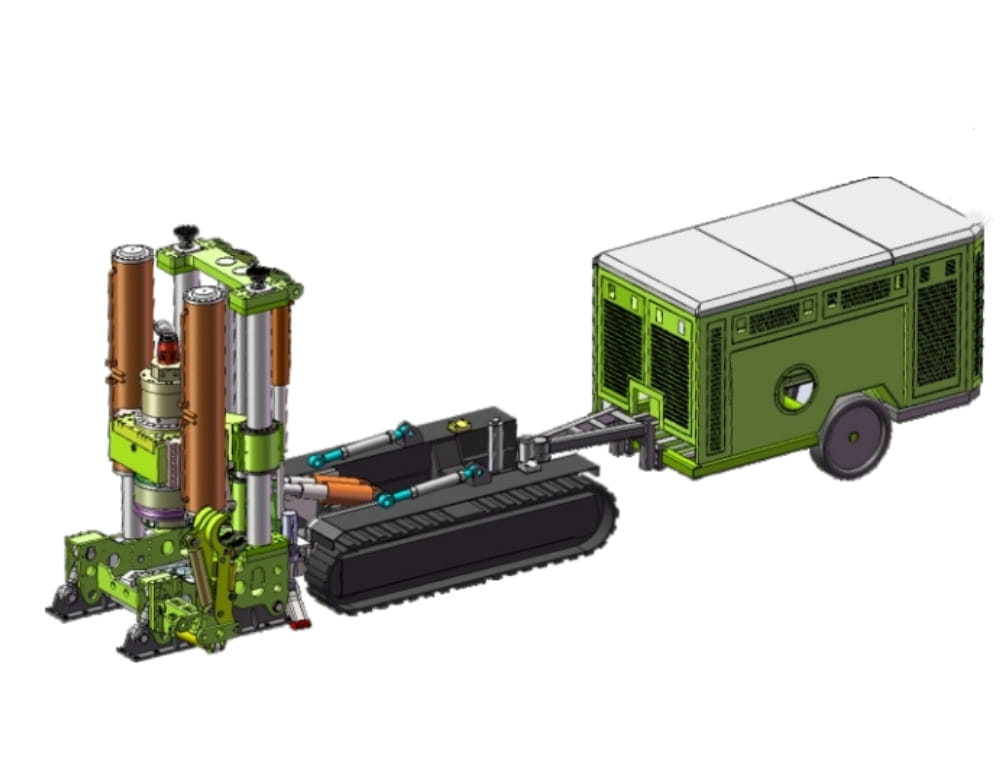
AT-2000WL Column articulated raise boring machine

Pilot hole diameter(mm):Φ250
Reaming diameter(mm):2000
Drilling Angle(°):30°-90°
Drilling depth(m):400
Weight(kg):16000±200
Drilling Main Unit Working size(mm):(7725±60) × (2312±30) × (2869±30)

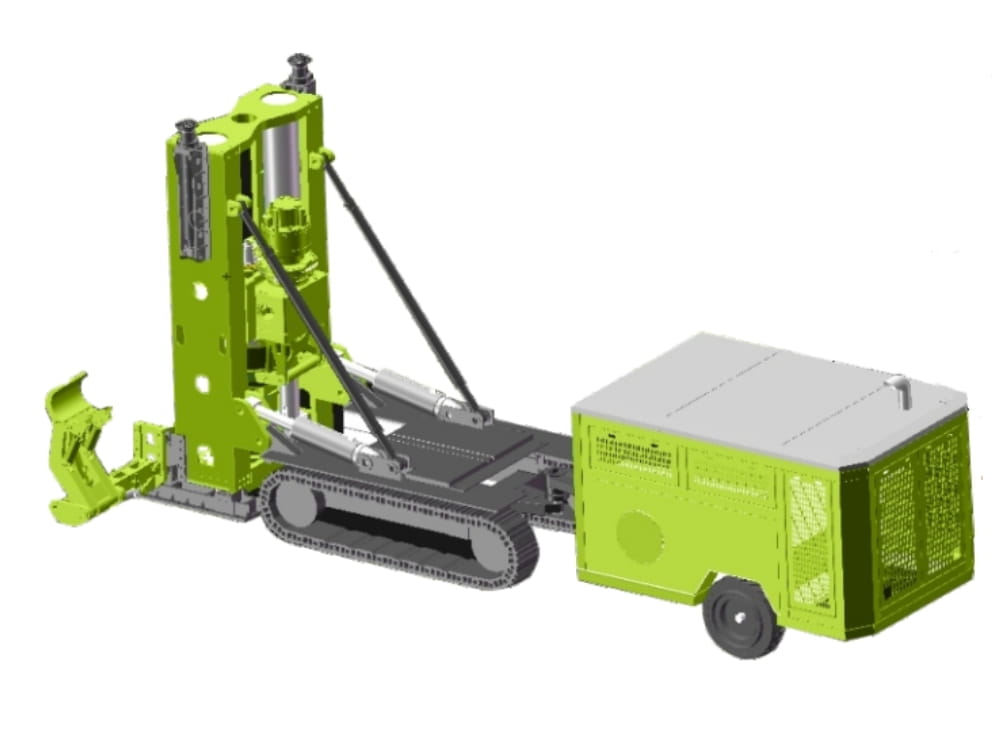
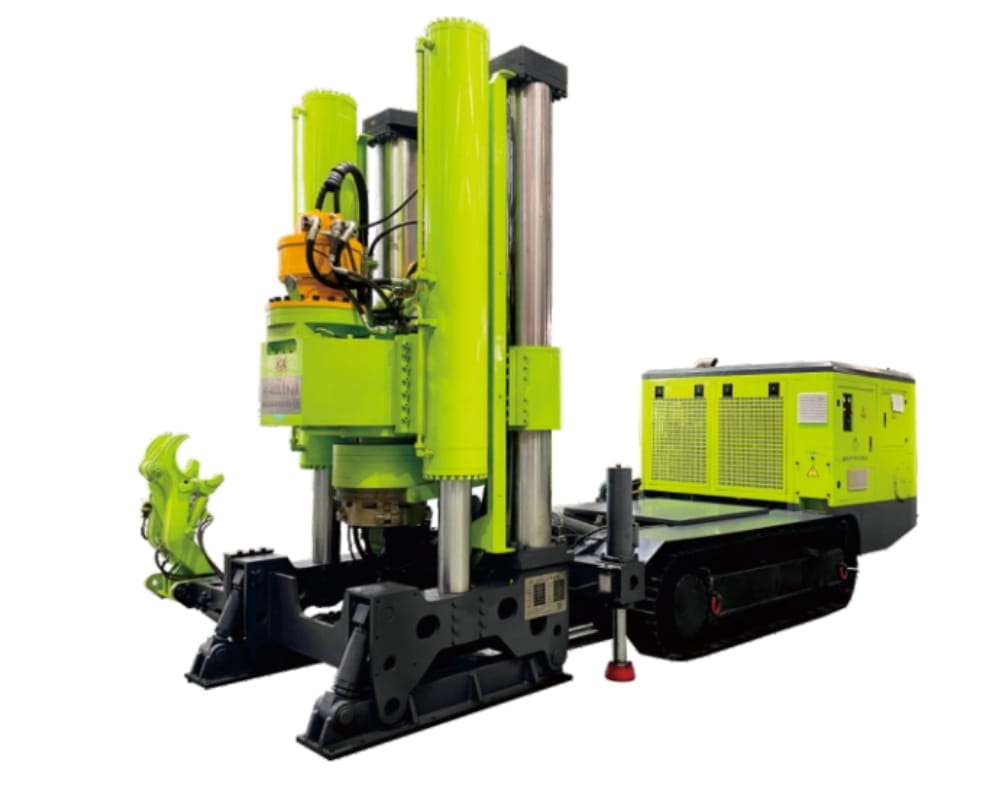
AT-2000WL column articulated raise boring rig is an innovative model designed for complex terrain, narrow tunnels and medium-depth raise construction. It integrates column-type rigid support and articulated trackless chassis, and has both high stability and flexible mobility. It is suitable for mining and tunnel projects with many bends, large slopes and frequent transfer of workstations.

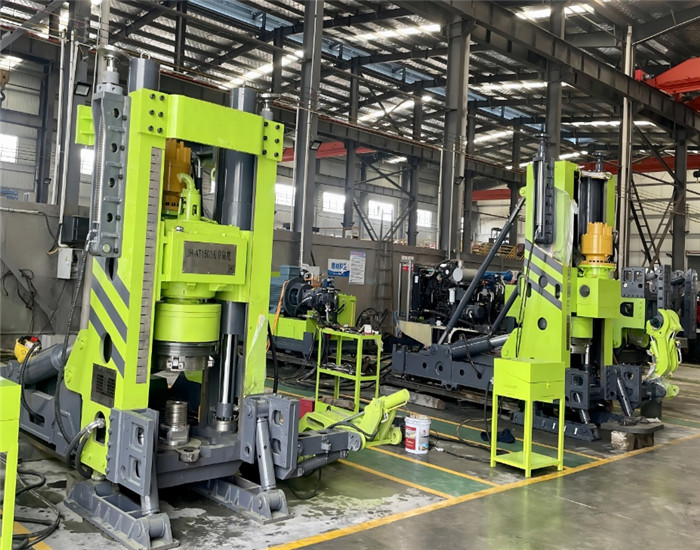
Column-articulated composite design

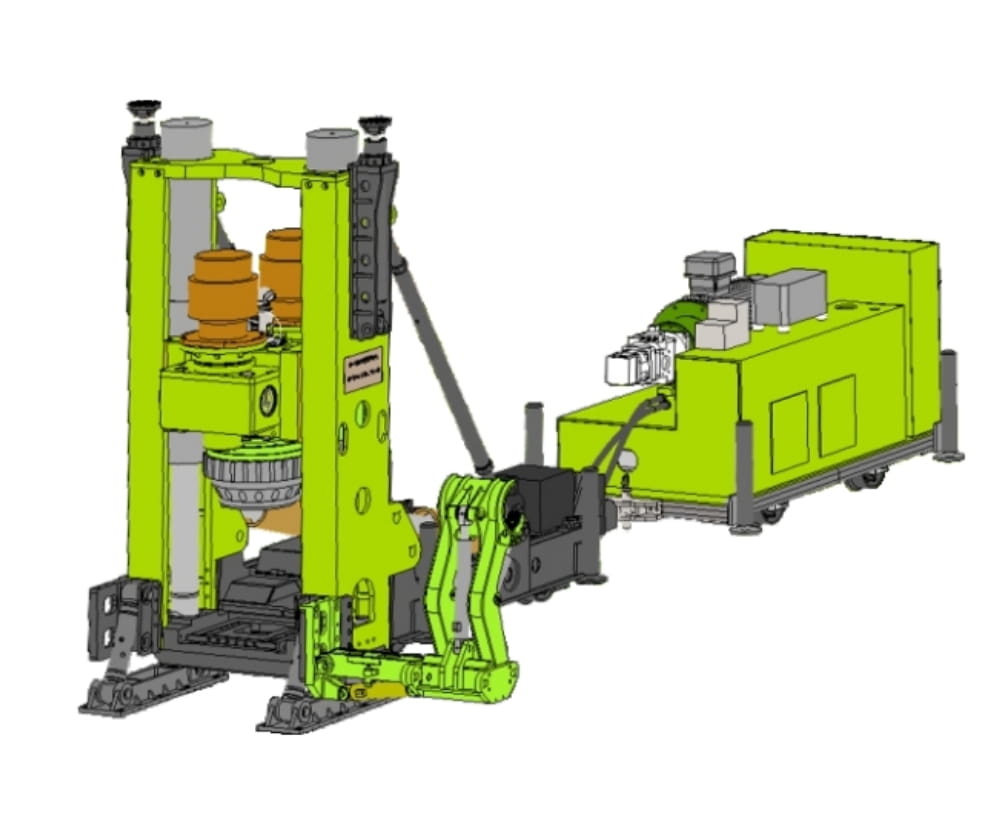
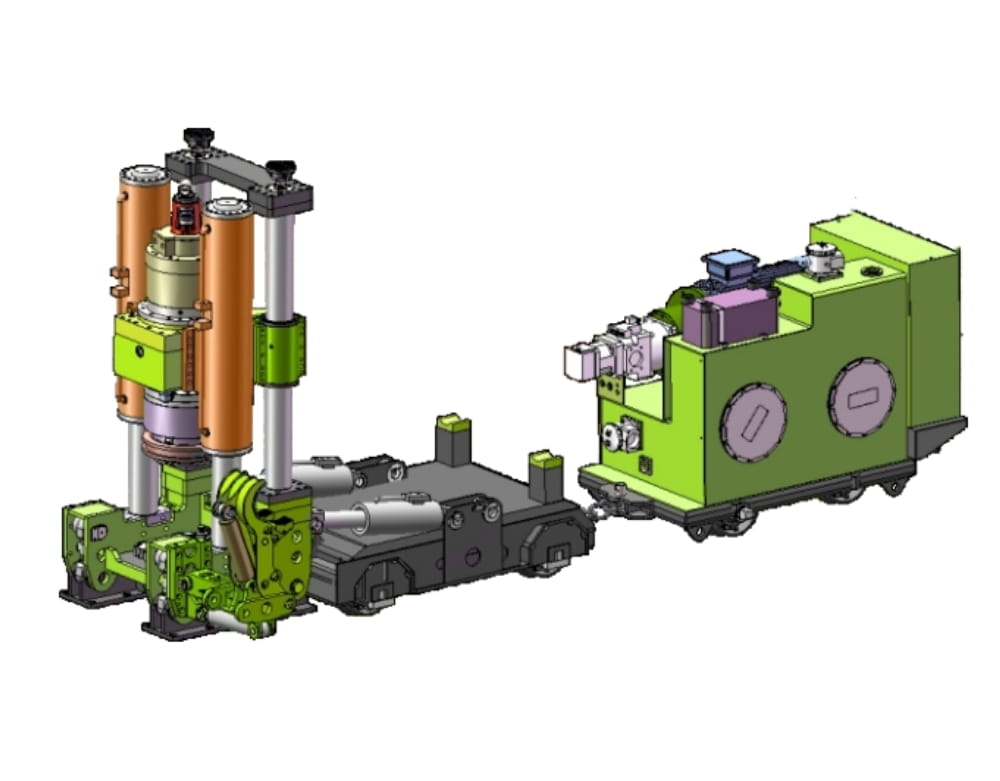
When drilling, the column of the LOOKING AT-2000WL column-articulated raise boring rig extends and anchors the top plate/bottom plate to form a torsion-resistant frame, which further improves the stability compared to the pure articulated type; the front and rear frames are connected by a hydraulic articulated shaft, supporting ±25° swing, and adapting to inclined lanes with a slope of ≤15°.

Modular power system

AT-2000WL main motor and standby diesel engine can be switched with one button to adapt to the environment with or without power grid; it can automatically reduce the frequency when under low load, reducing energy consumption by 15%-20%.

High-efficiency drilling raise boring machine-AT-2000W

Our AT-2000WL raise boring machine adopts high torque and high thrust design, which significantly improves the drilling speed under hard rock conditions and can effectively shorten your construction period. In addition, the use of automatic rod changing technology reduces manual intervention and has strong continuous operation capability, which can greatly save your construction costs.

Related Products

FAQ

How do the columns and articulated structures work together?

In mobile mode, the columns are retracted and the articulated chassis flexibly turns; in construction mode, the columns are extended and anchored, and the articulated parts are locked to form a rigid support.

How to prevent deflection in broken rock formations?

Metal mines/coal mines with many bends, narrow lanes, and large slopes; medium-deep well construction in confined spaces in urban underground projects;

Medium-sized projects that require frequent transfer of workstations.
Send Your Inquiry Today

Send Your Inquiry Today